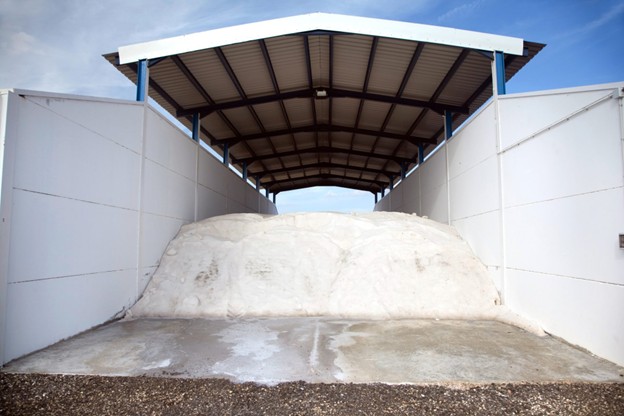
COMPREHENSIVE WINTER ROAD SALT GUIDE FOR OHIO HOMES & BUSINESSES
This winter road salt guide – especially across Northeast and Central Ohio – is crucial in combating lake-effect snow, black ice, and that familiar freeze–thaw roller coaster. If you’re wondering whether you really need de-icing salt on hand, the answer is almost always yes.
The trick is choosing the right product for:
- Your typical temperatures
- Your surface type (concrete, asphalt, pavers)
- Your property size and level of traffic
Whether you’re typing “road salt near me” at the last minute or planning ahead for bulk road salt deliveries, this guide walks through your main options and how to use them safely and efficiently.
What Does De-Icing Salt Actually Do?
De-icing salt is more than just “melt magic” in a bag. It works by lowering the freezing point of water.
When road salt or ice melt hits ice or packed snow, it:
- Dissolves into a salty brine
- Helps break the bond between ice and concrete, asphalt, or pavers
- Turns a solid sheet of ice into slush you can shovel, plow, or scrape away
- Adds traction as granules sit on top of the surface
Different products work down to different temperatures and have different impacts on concrete, plants, and the environment. With how often Northeast Ohio swings from freezing rain to single digits, choosing the right road salt really matters.
Choosing the Right Winter Road Winter Salt in Ohio
Whether you’re a DIY homeowner in Akron, a property manager in Cleveland, or a contractor bouncing between job sites across Northeast Ohio, you’ll usually be choosing from:
- Bulk rock salt (road salt) – cost-effective, great for large paved areas
- Bagged rock salt / Winter Melt – convenient, easy to store and handle
- Eco-focused de-icers (like HotRock EcoGuard + CMA) – designed to be less corrosive and more plant- and pet-conscious
- High-performance calcium chloride pellets – work in very low temperatures, act quickly
- Bulk bags of bulk road salt – efficient for large or high-traffic properties that need a steady supply
Let’s break down how each option fits real-world Ohio winter conditions.
Rock Salt: The Classic Road Salt Workhorse
What Is Rock Salt?
Rock salt (sodium chloride) – often just called road salt – is mined, crushed, and screened into larger crystals for outdoor use. It’s the traditional choice for:
- Roads and parking lots
- Commercial loading docks
- Residential driveways and sidewalks
If you’re looking for the best road salt for driveways in typical Ohio winter weather, rock salt is usually where you start.
How Rock Salt Performs in Ohio Winters
- Many treated formulations stay effective to around -20°F (exact performance depends on the product and conditions).
- Works best on solid surfaces like concrete and asphalt.
- Helps prevent bonding if applied before a storm, and breaks up ice after plowing.
Application Tips for Rock Salt
As a general starting point, many users:
- Apply around 4–6 lbs. per 100 sq. ft. for rock salt, then adjust based on conditions and product instructions.
- Shovel or plow first, then salt the remaining packed snow and ice.
- Clear slush and leftover salt when conditions allow to limit surface wear.
- Avoid heavy applications directly next to trees, shrubs, and turf to reduce salt stress.
Eco-Focused De-Icers: HotRock EcoGuard + CMA
If you’re trying to balance performance with plant and surface care, eco-leaning de-icers like HotRock EcoGuard + CMA are a smart middle ground.
What Makes EcoGuard Different?
EcoGuard is a carefully blended mix of rock salt with performance additives. It’s designed to:
- Stay effective in sub-zero temperatures
- Include corrosion inhibitors and a corn-derived ice melter
- Reduce bounce and scatter, so more product stays where you spread it
- Help protect vegetation and hardscapes when used as directed
- Provide a visible color so you can see coverage
When to Choose EcoGuard in Ohio
Eco-focused de-icers are a great fit when:
- You’re salting near landscape beds, decorative stone, or high-value hardscapes
- You maintain high-traffic walkways around schools, medical offices, or community spaces
- You want to use less product over the course of a long winter
Bagged Rock Salt & Winter Melt: Everyday Convenience
Bagged rock salt and Winter Melt products work well for homeowners and small businesses who don’t need a whole truckload of bulk road salt.
Why Choose Bagged Products?
- Easy to store in a garage, shed, or job trailer
- Simple to load into a hand spreader or toss by hand (with gloves)
- Perfect for spot-treating steps, walkways, and smaller driveways
Winter Melt bagged products typically use sodium chloride crystals intended for quick, long-lasting melting performance, often effective down to around 5°F, depending on the blend and conditions.
For many DIYers, this is the most practical best road salt for driveways day-to-day.
Excel Calcium Chloride Pellets: For Extreme Cold & Fast Action
When Ohio decides to show off – single digits, wind whipping off the lake, ice everywhere – that’s when calcium chloride pellets earn their keep.
Key Benefits
Excel Calcium Chloride Pellets are:
- High-powered pellets that can melt snow 2–5 times faster than standard rock salt
- Effective down to around -25°F when used as directed
- Able to penetrate thick ice quickly for faster breakup
- Safe for many concrete surfaces and vegetation when applied correctly
- Odorless and colorless, leaving less visible residue than some blends
When to Use Calcium Chloride in Ohio
Reach for calcium chloride pellets when:
- Standard rock salt slows down in very cold temperatures
- You’re treating high-priority areas like entryways, steep driveways, ramps, and steps
- You want reliable overnight results – for example, treating in the evening so it’s safer by morning
Bulk Bagged Road Salt: Smart for Large Properties
For large residential drives, HOA communities, apartment complexes, campuses, industrial sites, or municipalities across Northeast Ohio, having enough product on site is non-negotiable.
If you’ve ever searched “bulk road salt near me” mid-storm, you already know why planning ahead matters.
Why Bulk Bags Work Well
A Bulk Bag of Salt offers roughly the equivalent of a pallet’s worth of salt in one closeable bag. Benefits include:
- Bulk pricing that often beats case-by-case bag purchases
- Closeable, easy-to-store packaging that helps keep salt dry and free-flowing
- The option to refill the same sack from season to season, reducing packaging waste
Paired with bulk road salt delivery, bulk bags are a great option for contractors, plow companies, and facility managers who need reliable supply during back-to-back Ohio storms.
How to Apply Winter Salt Safely in Ohio
Ohio winter weather often runs through snow, sleet, rain, and back again in a single week. A simple, repeatable salting process helps you stay ahead of slippery conditions without overusing material.
Step-by-Step Salting Best Practices
- Stock up before the storm
Don’t wait for the forecast to turn red and flashing. Keep your preferred product – bagged or bulk road salt – on hand so you aren’t scrambling when everyone else is.
- Shovel or plow first
Salt works on thin layers of ice and packed snow, not on six inches of powder. Remove as much snow as possible before you salt.
- Pre-treat when you can
If ice is likely (freezing rain, overnight refreeze), apply a light, even layer ahead of time to help keep ice from bonding to the surface.
- Apply at recommended rates
- For rock salt, a common starting point is 4–6 lbs. per 100 sq. ft., adjusted by product label, traffic, and storm severity.
- For bagged blends, follow the label rates (often listed in cups per square yard).
- Focus on high-risk areas
Give extra attention to:
- Stairs and ramps
- Entrances and loading areas
- Downspout discharge zones
- Shaded or low-lying spots that stay icy
- Clean up after the melt
Once surfaces are safe and the slush has drained, sweep or shovel away leftover granules. This protects concrete and plants, and keeps extra salt out of storm drains.
- Protect landscaping and hardscapes
- Avoid piling heavily salted snow directly into planting beds.
- Use eco-focused blends near trees, shrubs, and turf when possible.
- In spring, water heavily and consider soil amendments to help flush residual salt and support soil health.
Seasonal Strategy for Ohio Properties
Early Winter (November–Early December)
- Decide on your “toolkit”: rock salt, eco-icer, calcium chloride, or a mix
- Stock bags, bulk bags, or bulk road salt in dry, covered storage
- Mark high-risk zones around your property or job sites
Midwinter (December–February)
- Expect repeated freeze–thaw cycles across Northeast Ohio
- Use rock salt or eco-icer for routine storms
- Switch to calcium chloride pellets when the forecast drops into single digits or below zero
Late Winter / Early Spring (February–March)
- Watch for daytime thaw and nighttime refreeze
- Spot-treat shady and low-lying areas prone to black ice
- Plan for spring landscape recovery if you used heavy salt near turf or beds
Frequently Asked Questions
How much road salt should I use on my driveway in Ohio?
Always start with the manufacturer’s recommended rate. A common benchmark for rock salt is about 4–6 lbs. per 100 sq. ft., but temperature, ice thickness, and traffic all matter.
More isn’t always better – overapplication wastes product and can stress concrete and plants. Use the lowest amount that keeps surfaces safe.
Is rock salt bad for my plants and lawn?
In high amounts, yes. Road salt can dry out roots and foliage, leading to browning or dieback.
To reduce risk:
- Avoid dumping heavy salt near turf, shrubs, and trees
- Consider eco-focused de-icers around sensitive areas
- In spring, water salted areas deeply and add compost or soil amendments to support recovery
What type of salt is best for extreme cold in Northeast Ohio?
During severe cold snaps (around -10°F to -25°F), calcium chloride pellets generally outperform basic rock salt. Products like Excel Calcium Chloride Pellets are designed for these conditions and can melt ice significantly faster than standard blends when used correctly.
When should I pre-treat vs. waiting until after it snows?
Pre-treat before:
- Freezing rain or sleet
- Wet snow followed by a sharp temperature drop
- Overnight refreeze after a mild, slushy day
Post-treat after:
- You’ve shoveled or plowed away most of the snow
- Only thin layers or patches of ice remain
In typical Ohio winters, a mix of pre-treating and post-treating usually works best.
How should I store winter salt between storms?
- Keep bags or super sacks in a cool, dry, well-ventilated space
- Keep product off the ground if possible, and covered
- Close or seal containers after use to prevent clumping and keep salt flowing freely for the next storm
Conclusion: Stay Safe and Ready All Winter Long
Ohio winters don’t have to catch you off guard (even if the forecast sometimes does). When you pair the right product – rock salt, eco-focused de-icer, calcium chloride pellets, or bulk road salt – with smart storage and application, you can keep your driveways, sidewalks, and parking lots safer for family, customers, and crews all season long.
If you’re preparing for winter in Northeast Ohio and need road salt, bulk road salt, bulk bagged, or bagged de-icers, Kurtz Bros., Inc. is here to help with experienced guidance, convenient pick-up and delivery options, and products tailored to our local winter conditions.