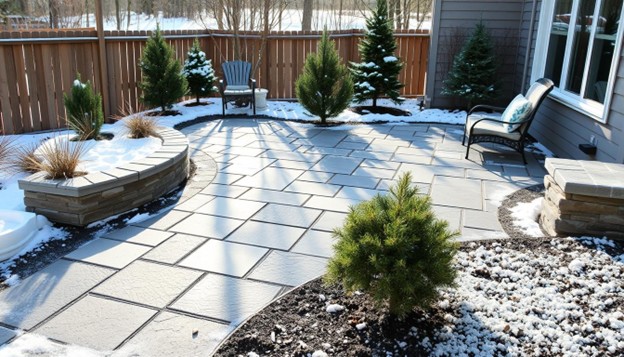
Winter shouldn’t stop us from enjoying our outdoor spaces. But how can we create stylish and long-lasting outdoor areas that withstand harsh weather? The answer lies in durable pavers. These versatile paving stones offer a perfect blend of functionality and aesthetics for your winter projects.
Pavers come in various materials, colors, and textures, making them ideal for creating unique outdoor flooring. From walkways to patios and driveways, these hardy elements can transform your space into a winter wonderland. Let’s explore how pavers can elevate your outdoor projects this season.
Did you know that some pavers can even have heating elements installed underneath? This feature can melt snow, making your outdoor areas safer and more accessible during winter months. With options ranging from concrete to natural stone, there’s a paver solution for every style and budget.
We’ll dive into the world of pavers, discussing their benefits, types, and installation tips. You’ll learn how to choose the right pavers for your winter projects and maintain them throughout the cold season. Get ready to create stunning outdoor spaces that’ll be the envy of your neighborhood!
Key Takeaways
- Pavers offer durability and style for winter outdoor projects
- Various materials are available, including concrete, brick, and natural stone
- Permeable pavers provide eco-friendly benefits and improved drainage
- Proper installation and maintenance are key for longevity
- Pavers can be used for patios, walkways, and driveways
- Some pavers can incorporate heating elements for snow melting
- Prices range from $2 to $50 per square foot, depending on the material
What Are Pavers and Their Benefits?
Pavers are flat outdoor flooring materials used in hardscape projects. They are versatile and durable. These elements come in various shapes and sizes, perfect for creating beautiful outdoor spaces.
Definition of Pavers
Paving stones are individual units used to create solid surfaces in outdoor areas. They’re ideal for patios, walkways, driveways, and more. Unlike poured concrete, pavers allow for flexibility and easy repairs.
Common Materials Used
The most popular types of pavers include:
- Concrete pavers
- Brick pavers
- Natural stone pavers
- Porcelain tile pavers
- Rubber pavers
Benefits of Using Pavers
Pavers offer numerous advantages over other hardscape materials:
- Durability: They can last for decades with minimal care.
- Design flexibility: Available in various colors, shapes, and textures.
- Easy maintenance: Individual units can be replaced if damaged.
- Increased home value: A worthwhile investment for property owners.
- Eco-friendly options: Rubber pavers made from recycled tires are available.
- Safety: Some types, like rubber pavers, offer excellent shock absorption.
With their longevity and versatility, pavers are an excellent choice for any outdoor project. They provide both functionality and aesthetic appeal, making them a top pick for homeowners and landscapers alike.
Choosing the Right Pavers for Winter
Winter weather requires careful paver selection for outdoor projects. We’ll look at key factors and top materials. This ensures your space stays stylish and functional all year.
Factors to Consider
When choosing frost-resistant pavers, consider slip resistance, durability, and water absorption. Non-slip pavers are key for safety in icy conditions. Look for textured surfaces that offer grip even when wet or frosty.
Best Materials for Cold Weather
Several materials excel in cold climates:
- Concrete pavers: Withstand freeze-thaw cycles without cracking or shifting
- Natural stone: Slate, bluestone, and granite handle temperature changes well
- Brick pavers: Resistant to freeze-thaw damage and provide slip-resistant surfaces
- Porcelain pavers: Low water absorption rate makes them durable and low maintenance
Granite pavers are strong for high-traffic areas. Sandstone pavers endure harsh weather from sun to frost. Limestone pavers offer a non-slip surface, perfect for wet areas like pool decks.
By picking the right frost-resistant pavers, we can create beautiful outdoor spaces for winter. These durable materials keep our projects safe and attractive all winter long.
Types of Pavers Suitable for Outdoor Projects
Choosing the right pavers is key for outdoor projects. We’ll look at three popular types that can change your outdoor areas.
Concrete Pavers
Concrete pavers are a favorite among homeowners. They’re strong and come in many colors and designs. They’re great for patios, driveways, and walkways.
You’ll need to seal concrete pavers every two years. This keeps them looking good, even in busy spots.
Brick Pavers
Brick pavers have a timeless appeal. They come in various colors and textures, perfect for unique patterns. They’re excellent for walkways and patios.
Unlike concrete, clay brick pavers don’t need sealing often. But, they might need it if they’re exposed to grease or oil a lot.
Natural Stone Pavers
Natural stone pavers add elegance to any outdoor space. You can choose from limestone, flagstone, and travertine for their unique looks and colors. They’re more expensive but can increase your property’s value.
They’re perfect for creating beautiful patios and garden paths.
Remember, the right paver depends on your needs. Think about your climate, how much you’ll use it, and upkeep when picking pavers for your driveway, patio, or walkway.
Preparing Your Outdoor Space
Getting your outdoor space ready for paving is key. We’ll show you how to clear the area, plan your design, and make sure water drains right. These steps are the first step to a great hardscape project.
Clearing the Area
First, remove all plants, rocks, and trash from your site. For a 60 square foot patio, dig about 6 inches deep. This depth is needed for a strong base of gravel and sand under your flooring.
Planning Your Design
Make a sketch of your design, thinking about views from windows and doors. For a 60 square foot area, you’ll need about 60 pavers, each 12 inches by 12 inches. Pick materials that match your home’s look and can handle your local weather.
Ensuring Proper Drainage
Drainage is vital to avoid water damage. Make a slope of 1 inch for every 8 feet from your home. This slope helps water move away from your foundation. For the base, use 4 inches of gravel and 1 inch of sand.
- Use a plate compactor to compress the gravel
- Add a 1-inch layer of sand over the gravel
- Install paver edging to secure your project
By following these steps, you’ll lay a solid base for your paving. This prep work makes your flooring durable and long-lasting. It will stand up to the weather and give you years of fun.
Installation Tips for Pavers
Installing pavers can be a fun project for homeowners. We’ll help you through it, whether you’re doing it yourself or hiring pros.
DIY vs. Hiring Professionals
Doing it yourself can save money, but it takes time and effort. For complex designs or big areas, pros might be a better choice. Many people don’t plan enough space for outdoor features, so planning is key.
Step-by-Step Installation Guide
- Clear and level the area
- Add base material (3/4 minus gravel) in 3-inch layers
- Compact each layer with a plate compactor
- Add a 1-1.5 inch layer of bedding sand
- Lay pavers with 1/8 inch spacing
- Install edge restraints
- Fill joints with polymeric sand
- Activate sand with water
Tools You’ll Need
Having the right tools and materials is key for a successful paving job. You’ll need:
- Plate compactor
- Shovel and rake
- Level
- Rubber mallet
- Saw for cutting pavers
- Wheelbarrow
- Safety gear
Remember to buy 5-10% more pavers for cuts and odd spaces. Make sure the slope is right (1 inch every 4 feet) for good drainage. Working with trusted suppliers like Belgard or Techo-Bloc ensures quality materials for your project.
Maintaining Pavers During Winter
Winter can be tough on our outdoor spaces. Keeping your outdoor areas looking great and lasting long requires proper paver maintenance. Let’s explore some essential winter care tips for your pavers.
Why Regular Maintenance Matters
Paver maintenance isn’t just about looks. It’s also key for longevity. With the right care, pavers can last 25 to 50 years. Regular upkeep protects against water damage, staining, and wear from harsh winter conditions.
Winter Care Tips
Frost-resistant pavers are a great start, but they need care. Here are some winter care tips:
- Clean pavers regularly to prevent staining and damage
- Use sand instead of salt for ice melting
- Apply a sealer to protect against water and ice damage
- Avoid metal shovels that can chip or scratch pavers
Avoiding Common Mistakes
Watch out for these frequent maintenance errors:
- Using rock salt, which can damage concrete pavers over time
- Neglecting to reseal pavers every 2-5 years, depending on the type of sealer
- Ignoring efflorescence, a natural occurrence in concrete products
By following these guidelines, you’ll keep your pavers in top shape through winter and beyond. Remember, proper installation is key to paver longevity. For durable solutions in Chambersburg, Pennsylvania, consider Nitterhouse Masonry for your new paver needs.
Creative Design Ideas with Pavers
Pavers are great for outdoor design. They’re perfect for patios, walkways, and fire pits. Let’s look at some cool ways to use them.
Patio Designs
Patio pavers come in many patterns and colors. You can make designs like herringbone or basketweave. Try mixing paver sizes for a unique look.
Grey and cream slip-resistant pavers are good near pools. For a rustic look, use tumbled pavers that look like natural stone.
Walkways and Pathways
Walkway pavers can change your landscape. You can make winding paths or straight ones. Large pavers are modern, while small ones are charming.
Mixing paver colors can guide the eye along the path.
Fire Pit Areas
Make a cozy fire pit area with circular pavers. Add comfy seating for winter gatherings. Use contrasting colors to make the space stand out.
Permeable pavers help with water management in this area.
- Mix paver types for visual interest
- Add paver borders to define spaces
- Use eco-friendly permeable pavers
- Create patterns with different paver colors
Remember, 63% of new homes have patios. This shows how popular outdoor living is. With these ideas, your outdoor space will be stylish and useful.
Eco-Friendly Options for Pavers
Homeowners are now looking for green solutions for their outdoor areas. They’re drawn to sustainable pavers that are good for the planet and look great.
Sustainable Materials
Permeable pavers are at the forefront of eco-friendly paving. They let rainwater soak through, helping to refill groundwater and cut down on runoff. Some can even filter up to 80% of pollutants from rainwater.
Recycled materials are another green choice. For instance, Aspire Pavers use up to 95% recycled tire rubber and plastics. This has kept over 25 million pounds of waste out of landfills.
Benefits of Eco-Friendly Pavers
Sustainable pavers bring many benefits:
- They have a lower environmental impact. Making them uses 95% less energy and cuts CO2 emissions by 96% compared to old methods.
- They help save water. Permeable pavers manage stormwater, reducing the need for chemical treatments.
- They last longer. Many eco-friendly pavers resist stains, scratches, and cracks, lasting longer than traditional ones.
- They can earn LEED points. Projects using these pavers might get LEED certification points.
Choosing eco-friendly flooring lets us create stunning outdoor spaces while helping the planet. Sustainable pavers offer more than just looks; they’re a wise choice for any outdoor project.
Cost Considerations for Pavers
Thinking about a paver project? Let’s discuss the cost. Prices for pavers vary a lot, with an average of $6 to $12 per square foot. Your budget will depend on the material and how big your project is.
Budgeting for Your Project
When planning your budget, keep these costs in mind:
- Concrete pavers: $3 to $20 per square foot
- Natural stone pavers: $5 to $40 per square foot
- Porcelain pavers: $15 to $205 per square foot
Don’t forget to add extra costs like preparing the site, labor, and materials like sand and gravel.
Factors Affecting Paver Pricing
Outdoor project costs can change based on:
- Location and regional demand
- Material availability
- Design complexity
- Professional installation vs. DIY
For example, a 60-foot paver walkway can cost between $8,000 and $11,000 with professional installation.
Long-Term Value of Pavers
Pavers might cost more upfront than concrete. But they offer many benefits. They are flexible, easy to repair, and last longer. With the right care, they can save you money in the long run.
Choosing quality materials and installation means a beautiful outdoor space. It will also increase your home’s value for years.
Conclusion: Enjoying Your Stylish Winter Outdoor Projects
Winter outdoor projects with stylish pavers are a great way to make your home look better. They also create welcoming areas. We’ve seen how durable outdoor flooring makes these projects stand out.
Recap of Key Points
Pavers are a wise choice for winter projects. They can last up to 25 years with the right care, increasing your property’s value. Paver patios need less upkeep than wood decks, just occasional sweeping and washing.
The design flexibility of pavers lets you customize colors, shapes, and sizes. This makes your outdoor space truly unique.
Encouragement to Get Started
Now is the best time to plan your winter outdoor project with stylish pavers. A well-designed paver patio can bring years of joy and increase your property’s value. Whether it’s a cozy fire pit area or a charming walkway, pavers add durability and style.
They can handle harsh winter conditions. Let’s enjoy the beauty of winter and make outdoor spaces we can use all year!