In Ohio, they always say that if you don’t like the weather, just wait a few minutes. Our area’s climate has something of a split personality—scorching one day, soggy the next.
Mother Nature may get moody around here, but for those of us who want a lush lawn, we have to find ways to work around it. Even when the weather gets challenging—in fact, especially when the weather gets challenging—you still need to stick with Step 3 fertilizer!
That’s why we’re going to show you how to apply Step 3 no matter what the weather throws your way. Read below for tips, and to discover why this fertilizer still matters, even in extreme weather.
Why You Should Stick with Step-3 Fertilizer in Extreme Weather
Our Step 3 Fertilizer is meant as part of a four-step lawncare system that includes the Step 1 Pre-Emergent, Step 2 Weed & Feed, and Step 4 Winterizer. With that in mind, here’s why it’s crucial to apply Step 3, even during weather extremes:
- It’s important to stay on the four-step schedule because consistency ensures long-term lawn health by providing vital nutrients at a crucial time.
- Skipping Step 3 can create a snowball effect: The lack of nutrition during extreme weather slows growth, which weakens roots, causes color to fade, and makes room for weeds to grow.
- Just because it’s hot outside doesn’t mean your lawn goes on vacation. It still needs to be fed, especially during summer stress periods that can hinder healthy growth.
Step 3 vs. Summer Challenges: Heat & Rain
The two big challenges that summer brings when it comes to fertilizing your lawn are heat and rain.
In general, it’s always best to apply fertilizer in the early morning or late evening to avoid leaf burn. This is especially true when it’s hot outside since the heat stresses your lawn and makes it more susceptible to burning.
And what about the rain? A light rain can help your lawn absorb the fertilizer, but a heavy rain will wash it away. Watch weather forecasts and plan carefully so that you can apply fertilizer on dry days or days where there is only light rain in the forecast.
If it does rain shortly after applying Step 3, here’s what to watch for:
- Areas like slopes where there is a lot of runoff—these may need a light reapplication of fertilizer if it has washed away.
- Places where water puddles—keep an eye on these because fertilizer can accumulate in high concentrations. Drain the area if possible, and if you notice yellowing or signs of leaf burn, you may need to flush it with more water to rinse away excess fertilizer.
- Fertilizer sitting on wet blades—if left to dry, this can burn leaves, so be sure to give the grass a quick rinse if you notice fertilizer stuck to blades.
Tips for Safe Step 3 Application in High Temps & Moist Conditions
Given the weather’s unpredictability in Ohio, you’re going to need a few tips to help you apply Step 3 fertilizer safely despite heat, humidity, and storms. Follow these basic rules to help avoid weather-related mishaps:
- Time application right: Always aim to apply the fertilizer during the coolest parts of the day—before 9 a.m. or after 6 p.m.
- Check forecasts: if possible, aim for a window that will give you 24 to 48 hours of dry weather after application.
- Water wisely: If no rain is expected after fertilization, give your lawn a light watering to help with absorption and rinse any fertilizer off the blades of grass.
- Avoid waterlogged lawns: Fertilizing waterlogged lawns can result in uneven absorption. If your soil is soggy, wait for it to drain and dry out before applying fertilizer.
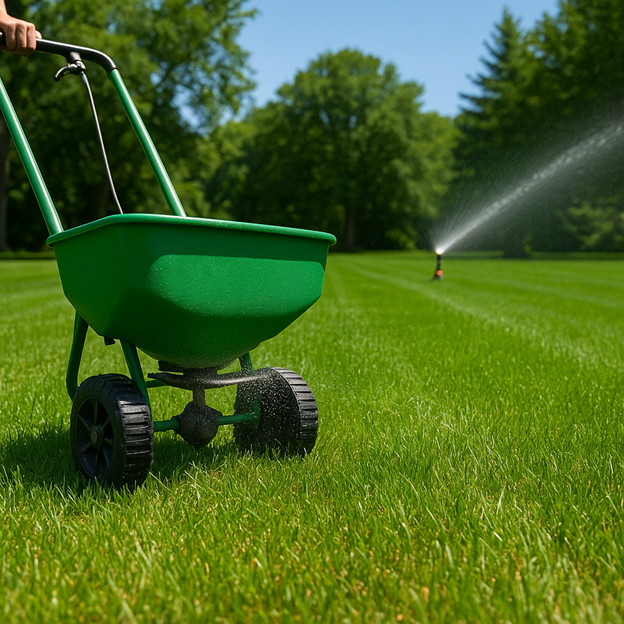
- Use a Spreader: The old method of casting fertilizer by hand or shaking it from a coffee can results in uneven fertilization and clumps of fertilizer that can burn your turf. Use a lawn spreader to get even coverage.
What to Do if it Rains After Application
Sometimes, despite an eye on the forecast and carefully made plans, the weather decides to do its own thing and rains anyway. If that happens, don’t panic!
If it was a light rain, it’s probably not a problem—and in fact, it may even be ideal because it’ll rinse off the grass and help the turf begin to absorb the nutrients.
If, however, you get a heavy downpour within 24 hours of application, you may need to do a light reapplication. In particular, reapply fertilizer to areas that experience a lot of runoff—and be sure to check any puddling areas to make sure they’re not swimming with excess fertilizer.
Pro Tip: Keeping your lawn well composted and mulched can help with moisture management, which makes it less likely for problems to occur when fertilizing—even if it rains. Ensure lush, green grass by spreading a quarter to a half inch of compost over the lawn each spring, and make sure that your mower finely chops grass clippings so that they return to the turf as natural, protective mulch.
Stay the Course With Step 3 Fertilizer
Even though the weather can be unpredictable around here, your best bet is to stick with the four-step schedule as best as you can. Getting Step 3 Fertilizer down at the right time is a big part of what will set your lawn apart from the grass in the rest of the neighborhood.
Need help caring for your lawn contact Kurtz Bros. today! That’s what we’re here for – If you have weather questions, call or stop in. We’ll help you time your Step 3 Fertilizer like a pro.