Thinking about updating the landscaping around your house? Consider creating a color-coordinated garden! When you carefully select flowers, plant them at the proper times, and give them the right level of care, your home will stand out from all the rest in your neighborhood. Vibrant, beautiful colors add loads of curb appeal — and among homes landscaped with basic greenery and shrubs, flowerbeds really catch the eye.
To learn how you can get started, read below, we’ve created a complete guide that will help you get your garden off to a great start.
Choosing the Right Flowers for a Color-Coordinated Garden
The first thing to do, before you break out the gardening tools, is to come up with a color scheme. Here are a few ideas:
- Create a monochrome color scheme that features flowers in a single shade, like all reds or all purples.
- Use a complementary color scheme that relies on opposite colors on the color wheel, like blue and orange or purple and yellow.
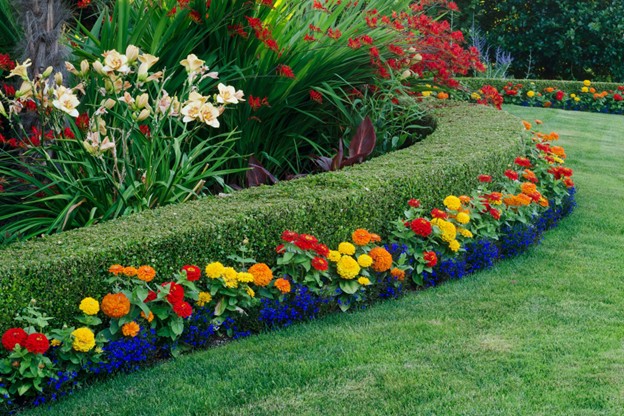
- Use an analogous color scheme, which features neighboring colors on the color wheel, like yellows, oranges, and reds, or pinks and purples.
Which flowers will fit these color schemes? Read below to learn about popular species, sorted by color tone.
Cool Tones
Pinks, purples, and the occasional blue make up the cool-toned family. For flowers in these shades, consider the following:
- Shrubs and hardy perennials like hydrangeas, lilacs, or hardy geraniums.
- Tender perennials including salvia and lavender.
- Annuals such as petunias, violas, or cornflower.
Warm Tones
These flowers fall on the other side of the color wheel in shades of yellow, orange, and red. Try the following:
- Shrubs and hardy perennials like rhododendrons, daylilies, or roses in yellow, orange, or red.
- Tender perennials like yarrow.
- Annuals like red geraniums, begonias, marigolds, zinnias, snapdragons, or portulacas.
Pastel Shades
Prefer a pastel color palette? Then you’re in luck because most of the flowers we’ve already listed will work for you — you’ll just need to search for pastel variants. For example, while many snapdragons, geraniums, petunias, and zinnias feature bright, bold colors, there are also quite a few variants that deliver delicate pastel shade, too. Similarly, you can find shrubs like lilacs ranging from white to lavender to dark purple, and you can find perennials like daylilies in virtually any shade imaginable.
Be sure to also check out perennials like peonies and foxglove for pastel shades of pink and purple.
When to Plant: Timing for the Best Blooms
In northeast Ohio, the climate zone ranges from 6a to 6b, and most gardeners plan for a last frost date of May 15th and a first frost date of September 30th. The actual first and last frosts vary each year, but these are generally considered the “safe” dates between which you shouldn’t experience a frost at all.
These are also the dates around which you’ll need to plan your gardening activities. Here’s a loose schedule to follow:
- Perennials: Plant these in early to mid spring for best results. You can also plant perennials very early in the fall — but make sure that they’ll have at least a month to establish themselves before regular frosts begin.
- Annuals and tender perennials: Plant these after all danger of frost has passed. Soil temperatures should be consistently 50 to 60 degrees.
- Bulbs: Plant in the fall for a spring bloom or in the spring for a fall bloom.
As you’re planting, consider the temperature of each area carefully. It’s best to avoid planting during excessive heat or excessive cold (including wind chills), but in some areas, you may be able to extend your planting window. For example, you can plant later into the summer in cooler, shadier areas, or earlier in the spring and fall in warmer, well-protected areas.
Where to Plant: Understanding Sunlight and Shade Needs
When it comes to sunlight needs, there are three types of plants:
- Full sun: These plants require at least six to eight hours of sunlight per day and tend to do best when they receive sunlight from dawn til dusk.
- Part sun: Part sun plants do well when they receive no more than six to eight hours of sun — like sun in the mornings or afternoons only, and shade for the rest of the day.
- Full shade: These plants require very little sunlight, so they do well under trees, large shrubs, or along the northern side of your home.
When you’re planning your garden layout, the best way to go about it is to plant taller plants along the back of the bed and shorter plants along the front or along borders. This ensures that sun-loving plants get all the sunlight they need without being shaded by taller plants. However, depending on the angle of the sun in relation to your flowerbeds, you may want to use part shade or shade-loving plants if shorter areas will be shaded by taller plants throughout much of the day.
Similarly, if containers will receive a lot of shade — like those placed on a shady porch — opt for begonias or other shade-loving flowers to add color to these areas.
How to Plant: Seeds versus Bulbs
When it comes to perennials, you’re usually best off buying pre-started plants that are ready to go in the ground. That’s because many can be difficult to start from seed or shoot — and even when you can get them started, many grow slowly enough that you’ll need to wait a year or two for them to come into bloom.
Annuals and bulbs are a different story, however. Here’s how you can get them started:
Starting Annuals from Seed
If you’re wondering when to plant flower seeds for spring, the rule of thumb is that whether you’re planting seeds or transplants, annuals should go in the ground when overnight soil temperatures are consistently 50 to 60 degrees. This usually means direct sowing the seeds in the ground on the last frost date. However, this also means that you may be waiting until July to see your first blooms — and that’s why many gardeners opt for indoor seed starting.
To start annual seeds indoors, use a good seed starting mix with seed trays, and follow the depth and spacing instructions provided on the seed packet. You can start most annuals between six and eight weeks before the last frost date so that they’ll be blooming or close to it by the time you move them outside. Be sure to adhere to spacing guidelines specified on the package when transplanting outside. Proper spacing is necessary for good airflow and to prevent plants from choking each other.
How to Plant Bulbs
If you’re looking for flowers to plant in April, spring bulbs are your best bet. Spring flowering bulbs are best started directly in the ground. Different types of flower bulbs will have different depth and spacing requirements, so make sure to follow package directions. When planting bulbs, the pointy end should point upward, and the flatter end where the roots will sprout should be at the bottom of the hole.
To stagger blooms so that you have bulbs blooming for a longer period, try the layer method. You can do this in the ground or in containers. Dig a hole or trench, and layer early-season bloomers like crocuses at the bottom of the hole. Cover them with an inch or two of soil, then place mid-season bloomers like tulips on top, another layer of soil, and then late-season bloomers like daffodils on the top.
Preparing Your Soil for Success
For most plants, the ideal pH level is around 6.0 to 7.5 — although a few plants, like hydrangeas and rhododendrons do prefer more acidic soil. In general, however. 6.0 to 7.5 is a good range to aim for, and you should also make sure that the soil is rich in organic matter so that it provides great nutrition to keep plants healthy.
When planting, mix compost into the soil in each hole. You can also use compost to top-dress flowerbeds to ensure optimal blooms. For container gardens or particularly demanding plants, try Tilth Bloom, which is a living super soil mix that is ideal for supporting flowering plants.
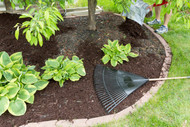
In flower beds and landscaping, be sure to also add a good, nourishing mulch like Sweet Peet. A well-mulched garden looks great because the mulch provides a nice backdrop for foliage and flowers. It also helps keep soil cooler, keeps weeds down, and helps with moisture retention, too.
In areas where soil doesn’t drain well, you can try mixing sand into the soil to improve drainage and promote healthy root growth.
Watering Strategies for a Thriving Garden
In most cases, deep watering is preferable to frequent light watering — but not always. Here’s what you need to know:
- Water new plants lightly each day until they establish themselves (which can take up to a month).
- Switch to deep watering (up to three times per week in very dry periods) for established beds.
- In planters, use self-watering devices like overturned bottles or wicking mechanisms to ensure consistent hydration.
- Early mornings are typically the best time of day to water so that plants can take up water through the hottest part of the day, and so that leaves can dry off before evening, which helps prevent disease and fungus growth.
Protecting Your Garden from Common Threats
Once your garden is in place, you want to keep it that way — and that means protecting it from a variety of threats. Read below to learn more about these different threats.
Animals
If animals are a problem, start with these natural deterrents:
- Rabbits: Plant lavender, sage, marigold, or rosemary around the borders of your garden. Rabbits dislike the scent and taste, so this may deter them.
- Deer: Deer dislike the scents of mint, oregano, and sage. You can also mix hot sauce, garlic powder, liquid dish soap, and water to make a homemade deer repellant.
- Dogs and cats: Try spreading citrus peels or coffee grounds on top of mulched beds. Both cats and dogs hate the scent.
If these measures fail, then you can try using netting or fencing to protect gardens. Another option is to set up a motion-activated sprinkler. After a few spritzes of water, most animals will learn to steer clear.
Insects
Certain flowers are valuable to have around not only for their colors, but also their ability to control pests. Marigolds are most well-known for companion planting, but you can consider other plants for this, too:
- Marigolds repel aphids, nematodes, and other common garden pests.
- Petunias repel aphids, tomato hornworms, leafhoppers, squash bugs, and asparagus beetles.
- Chrysanthemums repel Japanese beetles, ants, and spider mites.
- Lavender is both an insect and rodent repellant.
If you’ve tried companion planting, but still have an insect problem, it’s time to look into organic insecticides to remedy the issue.
Frost Protection
Sometimes despite our best efforts at scheduling plantings around when we think the last frost may be, we get a surprise frost anyway. Don’t worry, though — protecting your plants is as simple as covering them (or bringing them indoors, if they’re in containers).
To cover plants, many gardeners use milk jugs, buckets, frost cloths, plastic tarps held up by stakes, and so on. All you need to do is cover the plant before the dew can set and freeze, and make sure that the cover isn’t resting on the plant where it can strain or break stems.
In Conclusion
There’s a lot you’ll need to know if you want to create a thriving, colorful garden. However, it’s well worth your time and effort to learn because when you can create a beautifully color-coordinated garden, your home’s curb appeal will skyrocket, and you’ll get to enjoy a long growing season of beautiful blooms.
Since many of the most colorful plants are annuals, you can experiment each year with new color palettes and plant varieties. Each spring, be sure to check out almanacs and major gardening magazines. Both are valuable resources for both gardening tips and for learning about the latest and greatest plant varieties that you can try in your garden.
If you need additional help, be sure to contact Kurtz Bros., Inc. We’re always happy to answer your landscaping questions.