HOW TO WINTERIZE YOUR WATER FEATURE BEFORE FREEZING WEATHER
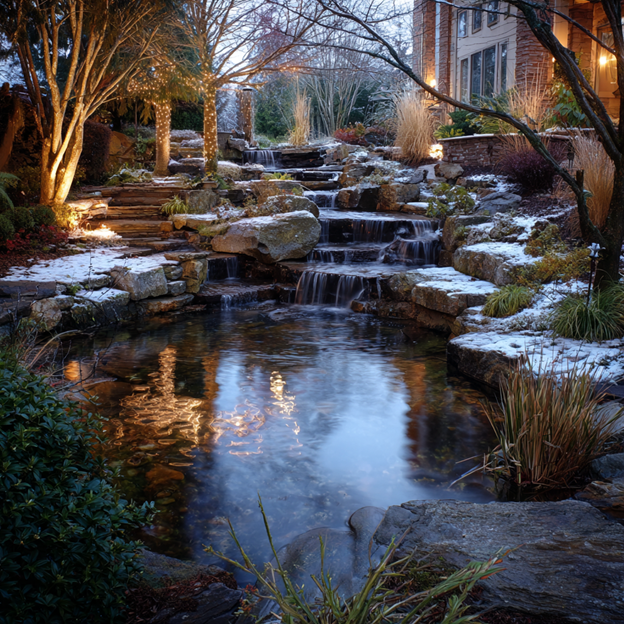
Winter in Northeast Ohio brings freezing temperatures, snow, and plenty of freeze–thaw cycles that can damage an unprotected water feature. The good news is that with a little prep in late fall, you can protect your fountain or pond so it’s ready to shine again in spring.
Learn best practices on how protect your water feature from winter by cleaning, draining, protecting, and covering your water feature before winter weather settles in.
Why Do You Need to Protect a Water Feature in Winter?
When water freezes, it expands. In a fountain, birdbath, or shallow pond, that expansion can:
- Crack concrete, stone, or fiberglass basins
- Damage pumps, plumbing, and fittings
- Harm fish and aquatic plants if the pond freezes over
Because Northeast Ohio winters can bring prolonged periods below freezing, it’s important to prepare your yard – including your water feature – before the first hard freeze.
Step-by-Step: How to Winterize and Protect Your Water Feature from Winter
Start by giving your water feature a thorough fall cleanup:
- Remove leaves and debris
After the leaves fall, skim or net leaves out of the fountain or pond. Leaves left to pile up can break down into sludge, attract pests, and affect water quality.
- Clear out dead plants and surface debris
For fountains and small ponds, remove any dead plants, spent annuals, or floating debris.
- Vacuum or rake the bottom of ponds
If you can, use a pond vacuum or a rake to lift out sediment. This helps prevent muck from settling and hardening over winter, which makes spring cleanup easier.
A clean start now means less work – and fewer smells – when warmer weather returns.
- Should You Remove and Clean the Pump?
In many cases, yes. Removing the pump is one of the best ways to protect it from ice damage:
- Turn off the power and disconnect any electrical connections.
- Take the pump out of the water feature, following the manufacturer’s instructions.
- Clean the pump by soaking it in a mixture of water and vinegar to loosen debris and mineral buildup. Then run clean water through it until the water runs clear.
Storing a clean, dry pump indoors helps extend its lifespan, so it’s ready to go again in spring.
- Do You Need to Drain the Water Feature for Winter?
For many fountains and small, fish-free ponds in Ohio, draining the water feature is the safest option.
Consider draining if:
- You have a fountain, birdbath, or shallow decorative feature
- There are no fish or sensitive plants you need to keep outside
- The basin or bowl is shallow or prone to cracking
Once drained:
- Remove as much water as possible.
- Use towels or absorbent blankets to soak up any remaining water.
- Make sure no standing water is left in cracks or bowls where it could refreeze and expand.
If the feature is too large to move and too shallow to stay filled safely, draining it and covering it (more on that below) is usually the best approach.
- How Do You Keep a Pond from Freezing Over?
If you have a large pond that you can’t reasonably drain, your goal is to prevent the pond from freezing solid across the surface, especially if there are fish and aquatic plants.
Keep in mind:
- In climates like Northeast Ohio, ponds that support fish are usually designed with enough depth (often at least 2 feet) so the deepest area does not fully freeze.
- If your pond is too shallow, or you know it tends to freeze thick, consider draining it partially and moving fish and plants indoors to an aquarium or holding tank for winter.
To help keep a pond from freezing over completely, you can:
- Use a pond de-icer or aerator to keep a small opening in the ice.
- Avoid breaking ice by force, which can shock fish.
The key is making sure there is enough open water for gas exchange so fish and plants can “breathe” all winter long.
- How Do You Care for Fish and Aquatic Plants in Winter?
If your pond is deep enough and properly designed for our Ohio winters, you may be able to leave hardy fish and plants outside.
For fish:
- As water temperatures drop and fish become less active, feed them less often.
- Switch to a lower-protein, cold-weather fish food if recommended for your species.
- Stop feeding when the water gets cold enough that fish are barely moving; uneaten food can foul the water.
For aquatic plants:
- Trim back hardy plants and move them to the deepest part of the pond that won’t freeze.
- Remove tender or tropical plants and bring them indoors if you want to overwinter them.
Most common aquatic plants are relatively affordable, so don’t stress if you need to replace a few in spring.
- When Should You Bring a Fountain Indoors in Northeast Ohio?
Whenever possible, bring smaller fountains and decorative water features indoors for the winter. In areas like Cleveland and the rest of Northeast Ohio, freeze–thaw cycles can be especially tough on concrete, stone, and resin.
If the fountain is movable:
- Drain it completely.
- Dry it out with towels or blankets.
- Use a dolly, cart, or a couple of extra hands to move it into a garage, shed, or basement.
Once it’s dry and indoors, freezing temperatures are no longer a concern.
- How Can You Use an Empty Fountain As Winter Décor?
Don’t love the look of an empty fountain all winter? Turn it into a seasonal feature instead.
After you’ve drained and protected the basin:
- In fall, fill it with hay bales, dried corn, pumpkins, or other harvest accents.
- For winter and the holidays, switch to evergreen branches, pinecones, ornamental twigs, and outdoor-safe décor.
This keeps your space looking intentional and festive, while still protecting your fountain from freezing water.
- Do You Need a Water Feature Cover?
If you can’t bring your fountain or feature indoors, a fountain or water feature cover is a smart investment.
Options include:
- Specialized fountain covers
- Often shaped to fit common fountain styles
- Include drawstrings or elastic at the bottom to seal out rain and snow
- Tarps or protective covers
- Make sure they’re secured so they don’t blow off in a Northeast Ohio windstorm
- The goal is to keep water and moisture out of the basin
If you’re unable to cover the entire feature, at least line the basin with towels, blankets, or other absorbent materials. These help keep water from settling in cracks where it can freeze and expand.
Frequently Asked Questions
When should I winterize my water feature in Northeast Ohio?
Plan to winterize before the first hard freeze, usually in late fall. In many parts of Northeast Ohio, that can mean starting your water feature winter prep in late October or early November, depending on the forecast.
Can I leave my fountain running all winter?
In most backyard situations, no. While some commercial or specialty fountains are designed to run year-round, most residential fountains are not intended for freezing conditions. It’s safer to drain, dry, and either move them indoors or cover them.
How deep should my pond be to leave fish outside in winter?
Depth needs vary by design and species, but in colder climates like Ohio, ponds that successfully overwinter fish are often at least 2 feet deep in the deepest area. Talk with a pond professional about your specific setup and fish types for best results.
Do I need a special cover for my water feature?
You don’t have to use a custom cover, but a properly fitted fountain cover makes the job easier. If you use a tarp, make sure it’s securely fastened and shaped so water runs off, not into, the basin.
What if I forgot to winterize and my water feature cracked?
If your fountain or pond does suffer winter damage, don’t panic. You may be able to repair cracks or replace damaged parts in spring. If it’s beyond repair, consider it a chance to refresh your backyard design with a new water feature that’s better suited to our Ohio winters.
Protect Your Water Feature Now for an Easier Spring
A little prep in fall – cleaning, draining, protecting pumps, and covering basins – goes a long way toward keeping your fountain or pond safe through an Ohio winter.
If you’re planning a project in Northeast Ohio and need mulch, topsoil, stone, or other materials to refresh your landscape around a water feature, Kurtz Bros., Inc. is here to help with expert guidance and convenient delivery options. From patio pavers and tools to soil, mulch, and greenery, Kurtz has what you need to make your outdoor space look great again when spring arrives.