MULCH A FALL REFRESH – REINVIGORATING YOUR LANDSCAPE!
Fall is typically associated with changing leaves, cooler temperatures, football season and shorter days. But you might be surprised to learn that it’s also an ideal time of the year to tend to your garden beds and landscaping — specifically when it comes to refreshing your mulch. Read on to learn why:
Mulch in the Fall? Why?
While many property owners opt to place new mulch in the spring or early summer to beautify their yards and landscaping beds, you might be surprised to learn that fall is an ideal time to do this. In fact, it’s best to place mulch after the ground has started to cool, but before the first freeze of the season. Here’s a look at why:
- Plant insulation and winter protection: A fresh layer of mulch helps insulate the soil, thereby preventing plant roots from temperature swings and frost damage.
- Soil protection and improvement: If you select an organic mulch, the various nutrients can break down during the fall months and benefit the soil during the wintertime. The result is healthier soil in the spring growing season. Mulch also helps add a layer of insulation to the soil, which can help soil-friendly microbes and earthworms remain active for longer.
- Free up time in the spring: Mulching in the fall can also free up valuable time the following spring, giving you more time to tend to spring gardening and other activities around your property.
Mulch has various other benefits worth mentioning, though these benefits aren’t unique to a specific season. Some of the other benefits of mulching include weed suppression, erosion control and adding curb appeal to your property.
Placing Mulch: What to Know
Placing mulch may seem like an easy DIY task, but various practices should be followed and supplies may need to be purchased for best results. Here’s a step-by-step guide on how to properly place mulch in the landscaping beds on your property:
- Start by preparing the area you’re going to mulch by removing weeds and any old mulch. While it is possible to place new mulch over old mulch, it’s important to ensure that any aging mulch hasn’t become matted, as this could negatively affect plants and vegetation. Remove any old mulch that has excessive buildup, that’s become matted or crusted, or that has fungal growth on it.
- Apply any soil amendments as necessary. This may include compost, which can help improve water retention, soil structure and fuel beneficial organisms, and fertilizer, which can help with plant growth.
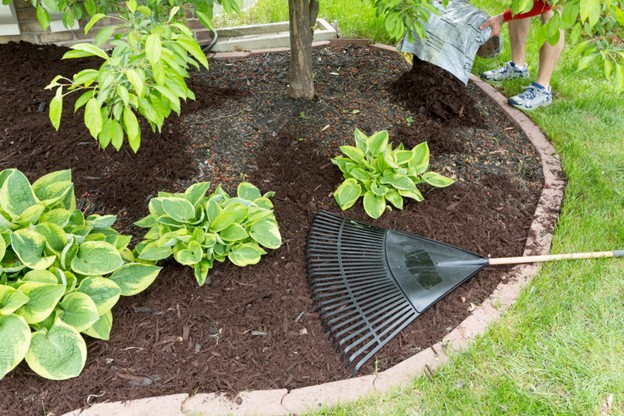
- Add new mulch by spreading a 2-to 4-inch-thick layer in your landscaping beds. Rake it evenly, and be sure to extend the mulch to the drip line or leaf canopy of your plants. It’s best practice to leave about a 3-inch gap around tree trunks and plant stems to allow them to “breathe” properly and prevent stem rot.
Edging and Weed Fabric
Consider purchasing edging and weed fabric as part of your mulching project to help suppress weed growth and create a clean edge in your landscaping beds.
Edging is ideal for creating neat, defined borders for your garden and landscaping beds. It also helps prevent mulch from spilling out of the area and into your lawn or yard.
Weed fabric can also be helpful, but only in the right conditions. If you’re using organic mulch, it’s generally best to skip the fabric so you don’t suppress air and water flow, which could impact soil composition and hinder plant growth. A weed barrier is most useful if you’re using rock or rubber mulch.
Color Hold and Fade Realities
Sun exposure and rainfall cause mulch to fade naturally over time, leading many property owners to replace or refresh their landscaping and garden beds every 1 to 2 years. Darker colors tend to break down more quickly, while brown and red mulches retain their color for longer periods of time.
While mulch dye is an option for keeping your mulch‘s color, we suggest refraining from using it. It can harm the soil and create an uneven, unnatural look over time. Instead, it’s best to refresh your mulch every few years as necessary.
How Much Mulch to Buy: A Guide
How much mulch should you buy? Measure the total length and width of the area you want to mulch. Multiply length by width to get the square footage, then divide that number by 324 to determine the number of cubic yards you’ll need. Always round up to ensure you have a little extra.
Delivery or Pickup?
The amount of mulch you’re buying will also help determine whether you can pick it up or should have it delivered to your property. If you only need a small quantity, it’s best to just pick it up yourself. However, if you have a larger project, want to save multiple trips to the yard, and want to save the time and effort of loading, transporting and unloading, then it’s best to have it delivered.
Your Mulch Checklist
To recap, here’s what should be on your fall mulch checklist:
- A rake
- Wheelbarrow (for transporting mulch to your landscaping and garden beds)
- Lawn bags (to remove old much and weeds)
- Enough mulch for your project
- Landscaping edging (if necessary)
- Weed barriers (if necessary)
- A tape measure to leave enough space around trees and plant stems
Contact Kurtz Bros., Inc. Today
Contact Kurz Bros., Inc. today for more information on why fall is an ideal time to refresh your mulch and to browse our bulk, bagged, super sacks, and stone mulch varieties.