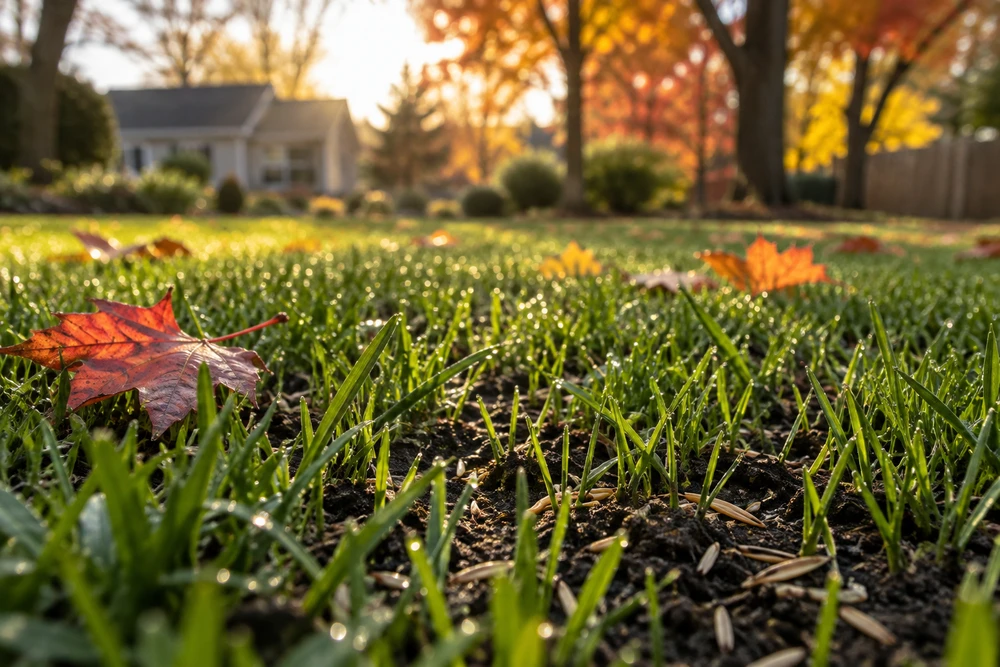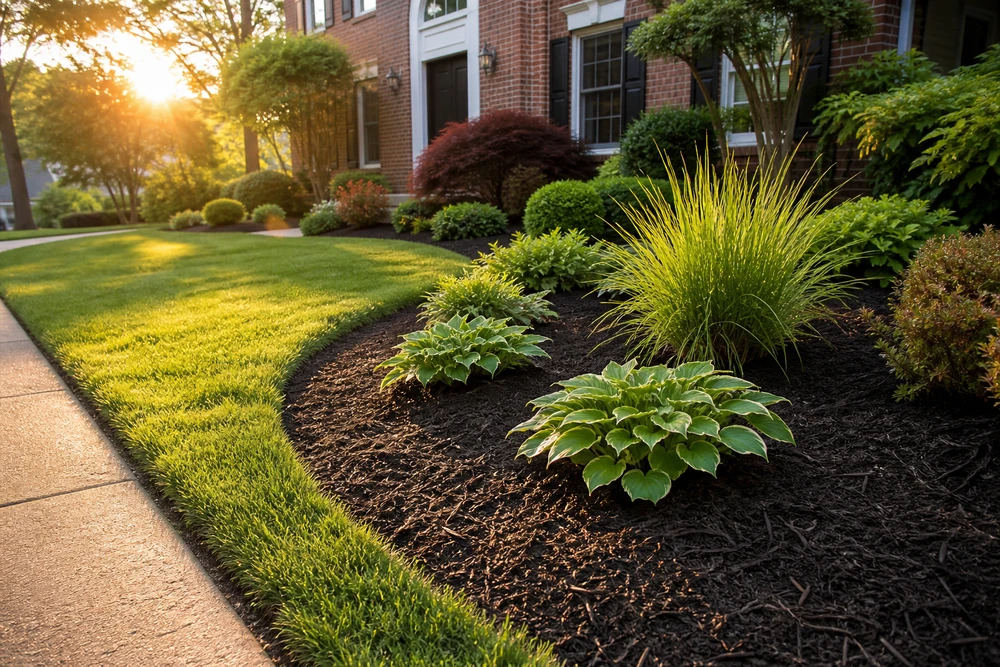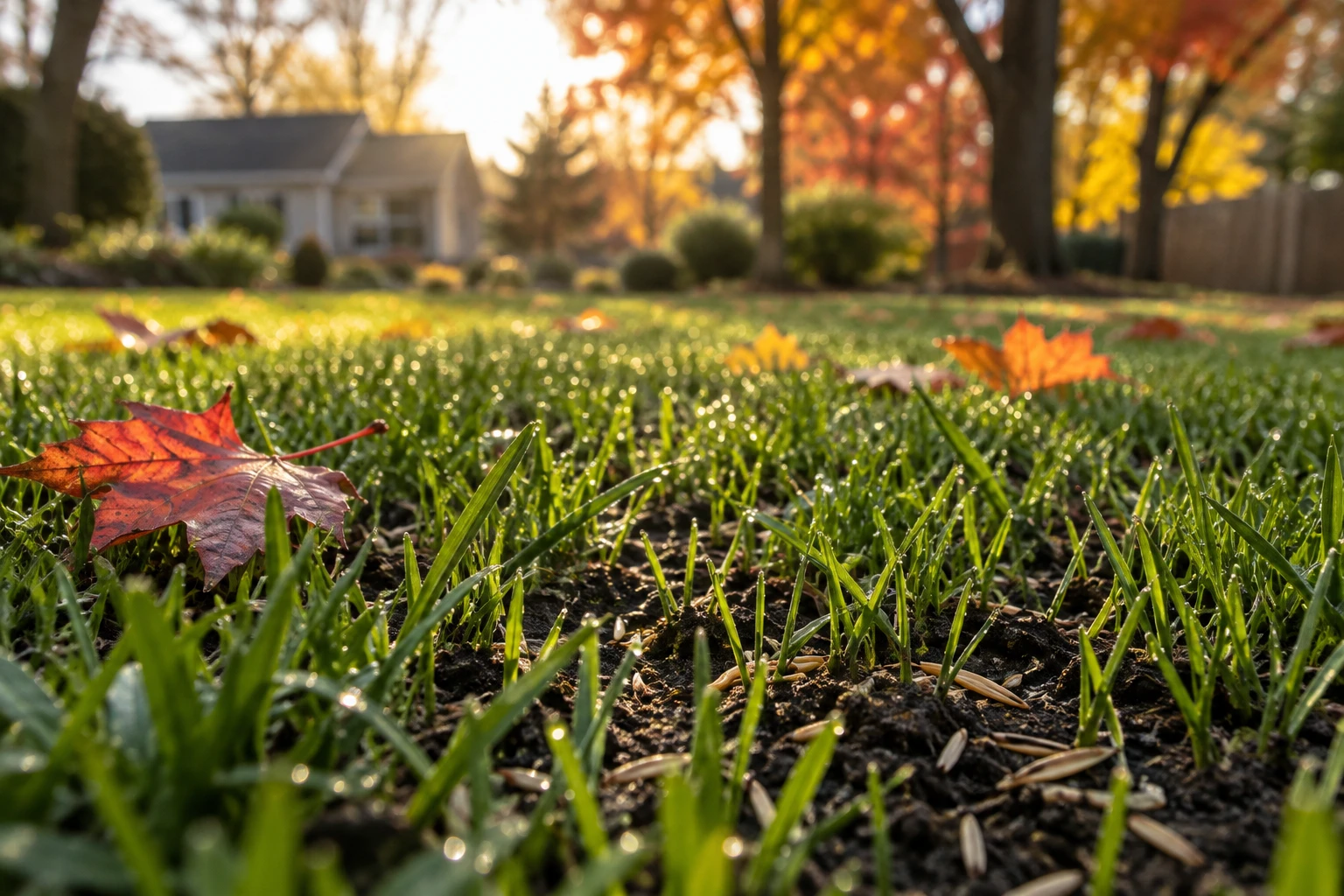
Every lawn has that one spot. Maybe it’s home plate for the neighborhood wiffle ball league, the dog’s favorite patrol route along the fence, or a patch that quietly gave up sometime around the Fourth of July. The good news? Thin grass doesn’t mean you need to tear everything out and start from scratch. With the right seed, good soil, and a little patience, you can fill those gaps and help your lawn make a comeback.
Fall top seeding, more commonly called overseeding, means spreading grass seed into an existing lawn without starting over. Pair the right seed with good soil preparation and consistent watering, and you can help your lawn head into spring thicker and better established.
Why Overseed? The Benefits of a Thicker Lawn
Overseeding does more than patch a few bare spots. Done well, it can help your whole lawn look and perform better:
- A thicker, fuller lawn. New grass fills in thin areas so your yard looks more even from the curb to the back fence.
- Fewer weeds. Dense turf leaves less open soil and sunlight for weed seeds to take hold. Weeds are opportunists, so don’t leave the door open.
- Better color and consistency. Filling gaps helps reduce that patchy, “we’ll get to it” look.
- Improved grass varieties. Overseeding is a chance to introduce newer seed varieties that may offer better drought, disease, or wear tolerance than what’s growing there now.
- Less mud and bare soil. Established grass helps hold soil in place, which means fewer muddy paw prints by the back door.
- Less disruption than starting over. You keep the lawn you have and simply make it better.
When Should You Overseed a Lawn in Ohio?
The best time to overseed in Northeast Ohio is generally mid-August through mid-September. Across Ohio, the recommended window can extend through late September, depending on location and grass type.
Ohio State University’s turfgrass specialists recommend planting earlier in northern Ohio and giving slower-establishing Kentucky bluegrass extra time.
Why does fall work so well? Soil still holds summer warmth, while cooler air reduces stress on young grass. Competition from summer annual weeds also becomes less of a challenge.
October seeding is riskier, especially in Northeast Ohio. Young grass needs time to establish before winter, so don’t assume a mild afternoon means there’s still enough growing season left. Ohio weather has a sense of humor, and the first frost rarely sends a calendar invite.
What Is the Right Grass Seed Mix?
The best grass seed mix for an Ohio lawn depends on sunlight, foot traffic, and the grass already growing there.
- Turf-type tall fescue is worth considering for sunny lawns where heat and drought tolerance matter.
- Kentucky bluegrass can help create a dense lawn but takes longer to establish.
- Perennial ryegrass establishes more quickly and is often included in cool-season blends. Fine fescues can suit partially shaded areas, although dense shade remains challenging.
Choose a blend labeled for your conditions, and check its compatibility with your existing lawn. Follow the package’s overseeding rate rather than its new-lawn rate.
Browse Kurtz Bros. lawn care products and ask for help matching seed to your yard.
What Is the Best Soil for Overseeding a Lawn?
Good seed needs contact with soil, not a cushion of dead grass or leaves. Grass seed is optimistic, but it can’t put down roots on last week’s clippings. That’s why preparation matters just as much as the seed bag.
For shallow low spots and lawn repairs, Kurtz Bros. All-Purpose Topsoil is a screened blend of sand, soil, and compost designed for applications including lawn installation and repair.
For top-dressing, ask about a finely screened, mature compost suitable for lawns. Keep the layer light enough that existing grass blades remain exposed. Avoid burying seed beneath a thick blanket of material.
A soil test can also help identify pH or nutrient issues before you buy amendments or fertilizer.
How to Overseed Your Ohio Lawn
- Mow and clean up. Mow slightly shorter than usual without scalping, then remove leaves and excess clippings.
- Expose the soil. Rake thin areas to loosen the surface. Core-aerate compacted ground, and address heavy thatch if it prevents seed from reaching soil.
- Prepare uneven areas. Add suitable topsoil to shallow low spots before seeding. Larger grading problems may need a separate repair.
- Spread seed evenly. Follow the label’s overseeding rate. Applying half in one direction and half across it helps distribute seed.
- Finish lightly and water. Gently rake for seed-to-soil contact and apply a light top-dressing where appropriate. Keep the surface consistently moist, not puddled. As seedlings establish, gradually water more deeply and less frequently.
Keep foot traffic off newly seeded areas. Yes, that includes the dog, who probably won’t love the new rules. Check herbicide labels, too: some weed-control products interfere with germination or require a waiting period before seeding.
How Much Top-Dressing Do You Need?
At a ¼-inch depth, 1,000 square feet requires approximately 0.77 cubic yard of material. One cubic yard covers approximately 1,300 square feet at that depth.
Treat that as a planning estimate, not a reason to bury existing grass. Measure the area you actually need to treat.
Give Your Lawn a Better Start
A thicker spring lawn starts with thoughtful fall preparation, not simply more seed. Explore soil, compost, and lawn care supplies at Kurtz Bros., and check delivery options for your address. Product availability can vary per location.